
Why Combine Mauritania and Senegal on One Trip?
The two countries share more than a border. The Senegal River marks the line between them, but their histories run together like the water itself.
Mauritania holds the desert chapter: trans-Saharan caravan routes, stone libraries, and a coastline empty for hundreds of miles. Senegal holds the river and the coast: colonial ports, Wolof rhythms, and the pulse of Dakar.
Travel them together and two separate trips become one story. We’ve programmed and run this Mauritania Senegal tour end to end for years, pacing it so nothing feels rushed.
The Adrar Plateau: Ancient Caravan Towns of Chinguetti and Ouadane
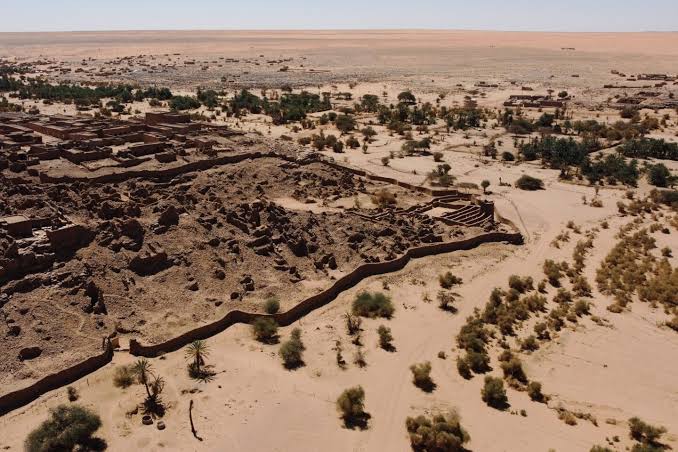
Every Mauritania itinerary centers on the Adrar plateau, reached from the small town of Atar. Here stand the ksour of Chinguetti and Ouadane, founded in the eleventh and twelfth centuries to serve caravans crossing the Sahara.
Chinguetti is the most accessible, and the most moving. Its old libraries still hold manuscripts on the Quran, astronomy, and law, guarded for generations by the same families. The paper is brittle. The handwriting is centuries old. Nobody rushes you through.
Ouadane sits a little further on, a hillside of stone slowly losing its argument with the sand. Two further ksour, Tichitt and Oualata, complete the UNESCO group, but they lie deep in the remote southeast.
We keep our heritage itineraries on the well-established Chinguetti and Ouadane circuit, and we route around the eastern areas that current travel advisories flag.
Where the Desert Meets the Atlantic Ocean
West of the Adrar, the Sahara runs straight into the ocean. The Banc d’Arguin National Park, a UNESCO-listed wetland, is one of the most important sites on earth for migratory birds.
Come in the northern winter and the shallows fill with flamingos, pelicans, and terns by the tens of thousands. The air out here is dry, sharp with salt, and thick with birdsong at dawn.
To the north, the iron-ore railway to Nouadhibou runs one of the longest trains in the world, often stretching more than a mile and a half. Most travelers admire it from the trackside rather than ride it. It’s still an unforgettable sight, headlights cutting through desert dust at dusk.
How Do You Cross the Border at Rosso?
The frontier follows the Senegal River, and most crossings happen at Rosso, where a small ferry carries vehicles and passengers over the water. A quieter option runs across the Diama dam closer to the coast.
This is the hinge of the whole trip. Behind you lies the desert. Ahead lies a green floodplain and the bird-rich Djoudj sanctuary on the Senegalese bank.
Border crossings can be the part travelers worry about most, with paperwork, patience, and the right small bills all mattering. We handle the formalities directly, so you’re not the one negotiating at the barrier.
Saint-Louis: Senegal’s UNESCO River Island
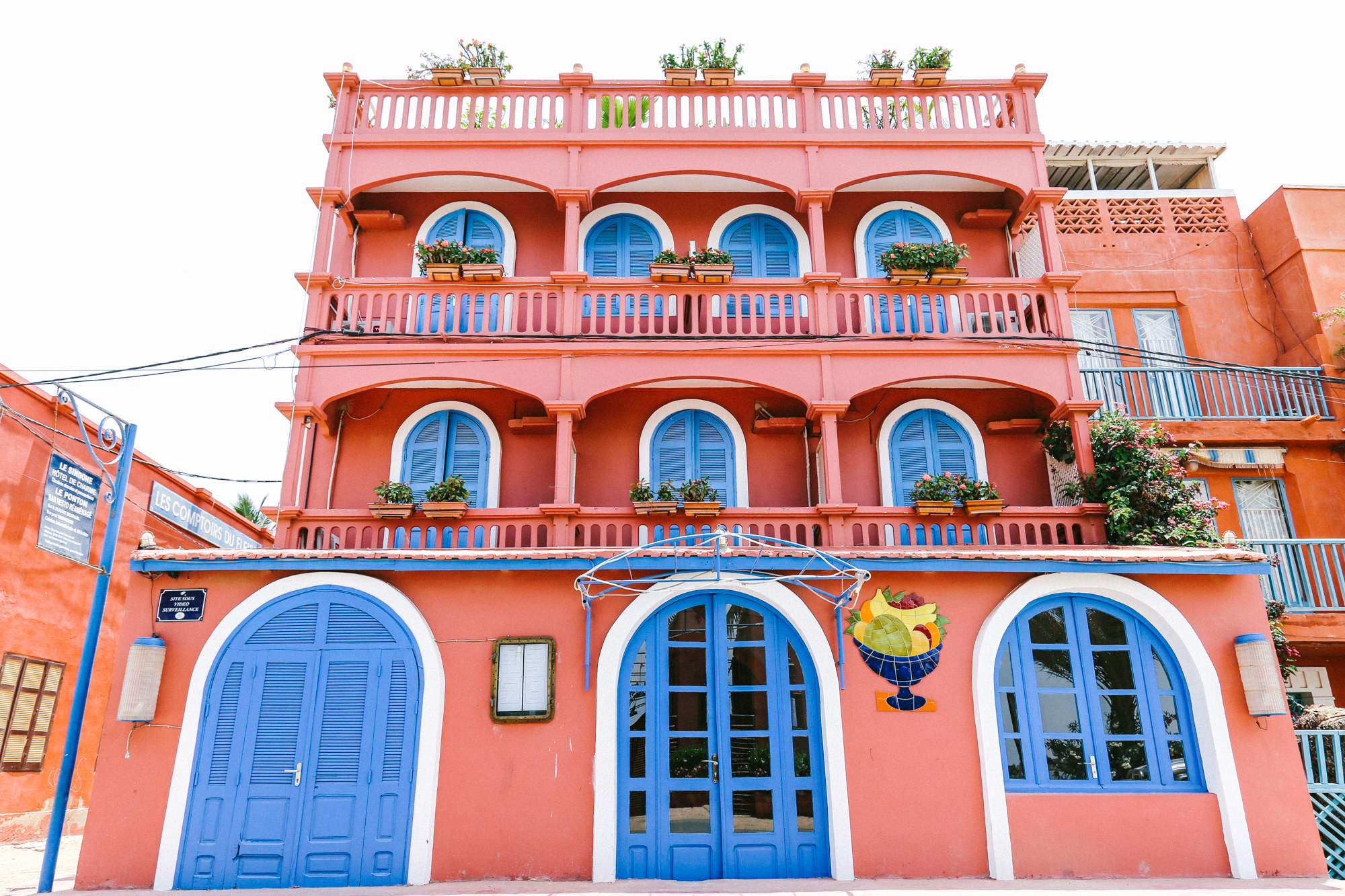
A short drive south brings you to Saint-Louis, the former capital of French West Africa and a UNESCO World Heritage Site since 2000. It sits on a narrow island in the river mouth, linked to the mainland by the old Faidherbe bridge.
Weathered colonial houses, iron balconies, and quiet streets give the island a mood unlike anywhere else in the region. Fishing pirogues line the riverbank at sunset, painted in the same bold blues and yellows for generations.
Saint-Louis carries a deep musical tradition, from griot storytelling to a celebrated jazz festival each spring. Many families here still mark a newborn’s naming day, or ngente, on the seventh day with prayers, drumming, and a shared meal, a tradition that predates the colonial city around it.
Down the Coast to Dakar and Saly
From Saint-Louis, the road runs south to Dakar, the westernmost city on the African mainland, and on to the beaches of the Petite Côte.
Many of our overland itineraries finish at Saly, on the sand at the Palm Beach Resort & Spa. Expect thieboudienne, Senegal’s national dish of fish and jollof-style rice, and strong, sweet Café Touba to close out the trip properly.
After the long, dry roads of the interior, a few days by the ocean make a fitting final chapter.
Do You Need a Visa for Mauritania and Senegal?
Here’s what US travelers need to arrange before the overland crossing:
- Mauritania — an e-visa arranged online before departure. Visa on arrival ended in January 2025, so the application has to be completed before you travel. The fee is paid in cash on arrival, in exact US dollars or euros, because change is not given.
- Senegal — visa-free for US passport holders staying up to ninety days.
- Both countries — a passport valid for at least six months and a yellow fever vaccination certificate. On this route you enter each country from a yellow fever risk area, so carry the certificate for both crossings.
Entry rules change. We confirm current requirements with every booking, and travelers should check their own government’s advice before departure.
Pro-Tip: Continent Tours Expedited Visa Service
Skip the guesswork on the Mauritania e-visa. Our team submits your application, tracks approval, and flags any document issues before you fly.
We also pre-confirm your yellow fever certificate and passport validity window as part of the same check, and we tell you exactly what cash to carry for the fee, so nothing surfaces at the border.
Ask your booking coordinator to add the Expedited Visa Service when you reserve your 2026 dates.
When Is the Best Time to Visit Mauritania and Senegal?
The most comfortable window runs from roughly November to March, when the desert cools and the river delta fills with migratory birds.
Daytime desert temperatures stay pleasant, nights get genuinely cold, and the coast holds a steady, breezy warmth. Pack layers for the Adrar and light cotton for the coast.
Why Book This Route with Continent Tours?
A Mauritania Senegal tour isn’t a trip to improvise. The desert sections call for permits, the right four-wheel-drive vehicles, careful fuel planning, and drivers who know the terrain by feel, not just by map.
Continent Tours operates its own offices, vehicles, and guides in Senegal, works hand in hand with our Mali team for extra capacity, and runs the Mauritania crossing as a single managed itinerary from the Adrar to the coast.
Founded in 2006, Continent Tours has spent two decades building the local relationships, licenses, and ground knowledge that turn a complex route into a straightforward one.
Frequently Asked Questions
Is it safe to travel in Mauritania?
The established Adrar heritage circuit and the Atlantic coast are visited regularly by organized groups. We plan itineraries around these established routes and keep clear of the eastern border regions that travel advisories flag. Current advice should be checked before travel.
Do I need a visa for Mauritania and Senegal?
US travelers need a Mauritania e-visa arranged online before departure, with the fee paid in cash on arrival. Senegal is visa-free for stays of up to ninety days. Carry a yellow fever certificate for both crossings.
How long does the overland trip take?
Our itineraries run from around eight days for a focused crossing to about fifteen days for the full Mauritania and Senegal arc ending on the coast.
Can the journey be done in reverse?
Yes. Many travelers prefer to begin gently on the Senegalese coast and build toward the desert. The itinerary works well in either direction.
Plan Your Crossing
Continent Tours runs the Mauritania and Senegal overland as a fully managed journey. To start planning, see our Mauritania and Senegal itineraries or contact our team to tailor the route to your dates.

Comment (0)